
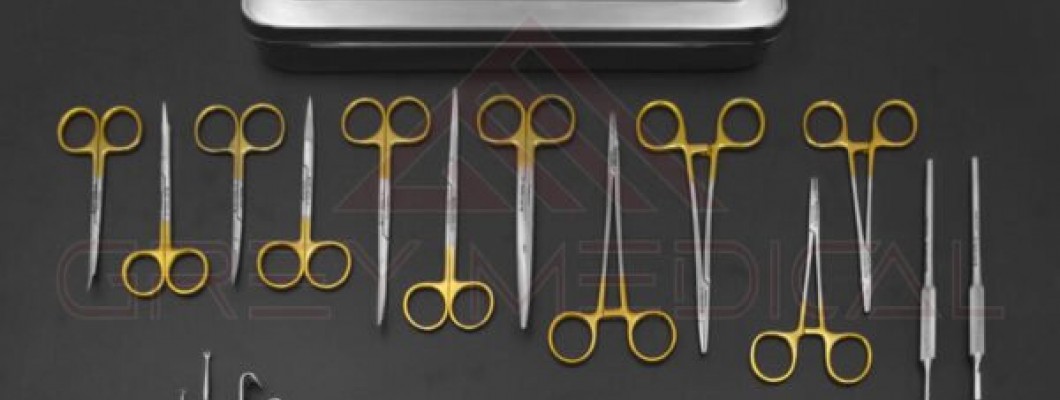
Plastic surgery instruments aid modern surgeons in reconstructing and fixing cosmetic needs. The field involves performing skin grafting, cosmetic surgeries, and reconstructive procedures, among others. No matter the surgical domain, surgeons require high-functioning and safe tools to perform the surgery.
Therefore, AzeeMed Instruments has set about to enable the world of plastic surgery with quality medical tools. At our manufacturing unit, surgeons can find every configuration and style of instruments used in plastic surgery.
This AzeeMed guide will walk you through a detailed breakdown of plastic surgery instruments. You will get to know about the reliable surgical tools for modern clinics, along with different types and uses. Continue reading to explore!
What are Plastic Surgery Instruments?
In the surgical field of cosmetic and reconstructive procedures, plastic surgery tools enable surgeons to graft, dissect, and aesthetically manipulate for an enhanced look. For instance, microsurgical tools for cutting, dermatomes for grafting, and rulers for measuring, among others.
The Ultimate Guide to Buying Plastic Surgery Instruments
Given is a quick and thorough guide for professionals looking to buy plastic surgery tools:
What Key Factors Should Never be Ignored?
Here are the key factors that shouldn’t be ignored while buying medical tools:
Material Quality
Typically, we use high-grade surgical stainless steel to manufacture our surgical tools. However, at times, we also use titanium, especially while constructing our microsurgery tools. Recently, the professionals have also moved to tungsten carbide inserts for added strength.
Construction and Performance
Every surgeon loves a well-constructed and well-balanced medical tool. Therefore, always make sure you buy from a surgical supply store that promises ergonomically designed medical tools. Furthermore, tools should be properly buffed to reduce surgical glare. Ensure every tool has a matte finish.
Sterilization-Friendly Instrument Design
Every cleaning method uses different cleaning agents. On the website, you should always ask the manufacturers for a compatibility guide for the medical tools. This gives you a rough map of what to clean with and how to go about the cleaning process.
Types of Plastic Surgery Instruments to Buy
Given is a brief round-up of all the essential medical tools that should be present in your plastic surgery kit:
Instruments for Cutting
During cosmetic procedures, surgeons need to cut and dissect skin layers, eye tissues, and muscles located in the facial region. Enlisted is a quick introduction to these important tools, precisely:
Scalpels:
Typically, Scalpels with a #3 handle and blade sizes #10, #11, and #15 find ample use in cosmetic procedures. These classic tools ensure you cut without any extra blood loss.
Scissors:
Usually, surgeons use the Mayo Scissors for cutting tough and hard tissues like the fascia. Moreover, they may also use these scissors to notch the sutures.
Typically, tissues located deep in the cavities are handled with the help of Metzenbaum scissors. While Iris scissors work great as precise cutters, incising delicate tissues.
Electrosurgical Devices:
With the advancements in the field of cosmetic surgeries, surgeons are now depending on the Monopolar/bipolar inserts for closing the blood vessels. These specialised tools fall under the electrosurgical devices as they use electric current for their function.
Instruments for Grasping
Forceps:
Mostly, plastic surgeons use Adson Forceps for their ability to hold multiple layers of skin during the procedure. Similarly, surgeons may also use Russian forceps for their wonderful ability to manipulate and grasp dense tissues.
Hemostats:
During cosmetic procedures, there is a need to precisely stop the bleeding. This is achieved with the help of Babcock clamps. Moreover, surgeons may also use Crile hemostats. These help with small blood vessels.
At our surgical supply store, you can find both curved and straight configurations. The former helps clutch the blood vessels located in deeper cavities. While the latter helps with superficial blood vessels.
Instruments for Suturing
Mostly, during tummy tuck and breast augmentation procedures, surgeons use staplers for the precise closing of the wound. These have been studied to ensure faster healing time. Furthermore, during high-profile procedures such as these, extensive closure of the surgical wound takes place. Staplers ensure the healing marks fade with time.
When stapling is not involved, plastic surgeons rely on suturing. Mostly, they use
Mayo-Hegar Needle Holder to drive the needles. These excellent needle holders prevent a showy overall look.
Tools for Retracting
Typically, for cosmetic surgeries, Senn Retractors come to the rescue. They feature a double working end with a rake and a blade. While the rake hooks the skin, the blade helps push aside the surgical incision.
Furthermore, skin hooks are also used. Majorly, Gillies or Kleinert-Kutz hooks find usage in this surgical domain. These skin hooks help hold the skin edges. We have made the edges smooth to prevent any harm to the healthy tissues.
Tools for Marking
Typically, the surgeon begins the procedure by marking the cosmetic surface. This can be achieved with the help of skin markers. Furthermore, measurements should be done before markings. For this purpose, surgeons use rulers.
There is yet another method to ensure the symmetry is well-aligned. For this, surgeons use calipers.
Top Plastic Surgery Instruments Worth Investing In
Scalpel & Blades
Mostly, surgeons prefer a scalpel blade#10 for general skin incisions. While for curved contours, blade#15 works wonders.
Adson Forceps
Cosmetic surgeons prefer using Adson forceps of 12cm length and 0.5mm to 0.9mm micro-tips. When high grip is required, surgeons use Adson-Brown forceps.
Iris Scissors
Fine dissection and precise cuts can be achieved with the help of Iris SuperCut scissors. Usually, they feature a microserrated blade. Furthermore, the plastic surgery field mostly deals with the curved contours of the body. During such critical hours, Iris scissors work wonders.
Skin Hooks
Double-Prong Skin Hooks or Gillies Skin Hooks smoothly elevate the skin flaps for better visibility. Therefore, every surgical field should have these available.
Needle Holders
For suturing in plastic surgery, Olsen-Hegar or Mayo-Hegar needles have been thought of as the best needle drivers.
Why Buying High-Quality Instruments Matters
Here’s why buying top-grade surgical tools matters:
On Point Manipulation
A well-constructed tool perfectly fits the contours of the body. In reconstruction surgeries, having accurate medical tools is important for on-point moves and procedures.
Patient Safety
Ensuring patient safety should be every surgeon's top priority. Therefore, always buy medical tools from certified surgical supply stores. It is the only way to ensure a fast healing time and a field with no technical complications.
Where to Buy Plastic Surgery Instruments
Once you have decided on the procedure followed, the instruments used in plastic surgery are finalised. For this purpose, practitioners must rely on supply stores with a good reputation and certifications.
Trusted Online Medical Suppliers
To check for the reputation, always go through the Google rankings and reviews. Moreover, every certified surgical supply store displays its certifications for customers to see. Lastly, one should remain connected with the online medical supply community. This could be a great help for newbies and beginners who are just starting with their purchases.
Manufacturer Websites
An easy-to-navigate webpage is a plus when it comes to online shopping. See if the website has a support page, a contact page, and a blog page for detailed information. For example, AzeeMed Instruments has different facilities elistedon its page and showcases a user-friendly interface.
FAQs
Q1: Can plastic surgery tools be cleaned easily?
Yes, you can easily clean the plastic surgery tools by following the recommended guidelines. Usually, technicians rely on autoclaving. However, for detailed tools with sensitive edges, ultrasonic cleaning methods are preferred.
Q2: What function does a skin hook perform?
During plastic surgeries, professionals and surgeons use a skin hook to retract and hold layers of skin. Typically, the hook is curved and sharp for a secure grip.
Final Thoughts on Plastic Surgery Instruments
In today’s world, having reliable surgical tools for modern clinics is the first step to a successful surgery. Plastic surgeons rely on top-grade plastic surgery instruments for optimum results and surgical success. At AzeeMed, all our plastic surgery tools are CE and FDA-approved. If you are looking for a well-reputed surgical supply store, contact us now!
4 Comment(s)
Excellent post! Your ideas were well-organized and concise. I particularly appreciated how you made the subject simple enough for newcomers to understand.
Very good blog! Do you have any suggestions for aspiring
writers? I'm planning to start my own site soon but I'm a little lost
on everything. Would you suggest starting with a free platform like Wordpress
or go for a paid option? There are so many choices out there that I'm totally confused ..
Any suggestions? Appreciate it!
Hi there! Quick question that's entirely off topic. Do you know how to make your site mobile friendly? My site looks weird when browsing from my apple iphone. I'm trying to find a theme or plugin that might be able to fix this problem. If you have any recommendations, please share. With thanks!
You brought up several points that I had not considered before. It's obvious that a great deal of work went into gathering and arranging the data so that readers could truly benefit from it. I like looking through blogs in this niche because of posts like these.
Leave a Comment